
Turning ERP Failure into Enterprise System Truth
When a major infrastructure and energy services business invested in SAP, the platform never became the system of record. Execution Edge's diagnosis revealed that the real failure was not the technology, but the governance and operating model surrounding it. This case study sets out how we approached the recovery.
CASE STUDIESBLOG
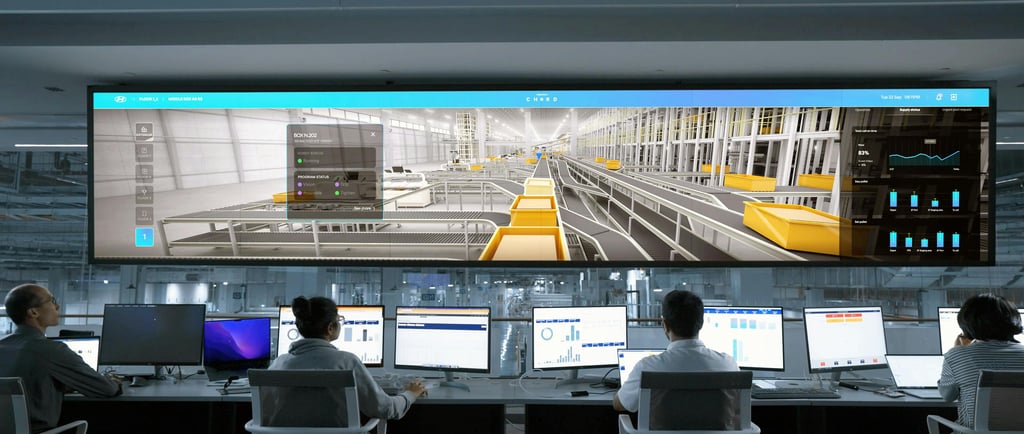
Enterprise Resource Planning (ERP) system deployments rarely fail because the software is incapable. More often, they fail because the organisation has not built the right operating model, governance discipline, data architecture, and behavioural routines required for the system to become the authoritative source of truth.
Execution Edge recently supported a major infrastructure and energy services business facing exactly this challenge.
The Challenge
The organisation had invested in SAP, but the platform had not become the enterprise system of record. Core operational control remained fragmented across spreadsheets, manual approvals, email-based workflows, and disconnected reporting tools. Project cost, schedule, revenue, procurement, materials, asset, quality, finance, and contract data existed in parallel systems rather than one governed enterprise architecture.
The result was predictable: inconsistent reporting, weak auditability, limited management confidence in performance data, and continued reliance on manual workarounds.
Our diagnostic concluded that this was not a technology failure. The true failure was the governance and operating model.
The SAP deployment had gone live before the business had fully defined the enterprise disciplines required to support it: standardised project lifecycle controls, Work Breakdown Structure governance, milestone-based revenue recognition, integrated cost–schedule–progress controls, asset hierarchy, warehouse traceability, procurement approval logic, digital QA evidence, contract lifecycle governance, and automated financial reporting.
In practical terms, the system had been installed before the organisation was ready to operate as a system-driven enterprise.
The Approach
Execution Edge’s intervention focused on three priorities.
First, we reframed the problem at board and executive level. The issue was not “fix SAP” in isolation. The real task was to establish a governed enterprise operating model in which SAP, digital workflows, master data, approval controls, and performance reporting worked together as one integrated management system.
Second, we mapped the control gaps across the full operating environment. This covered project systems, procurement, warehouse management, asset maintenance, QA/NDT traceability, contract lifecycle management, finance workflows, reporting, and user adoption. This revealed that many critical transactions were still being initiated, approved, recorded, or reported outside the formal ERP environment.
Third, we developed an institutionalisation roadmap. The aim was to move the organisation from fragmented manual truth to governed system truth. This required completing SAP process optimisation, cleaning master data, integrating workflow applications, enforcing data ownership, digitising approvals, embedding reporting dashboards, and creating disciplined governance routines around system usage.
The key lesson is relevant to any UK-based or international business pursuing ERP, AI, digital transformation, or performance improvement.
Technology does not create control by itself.
Control comes from the alignment of process ownership, data standards, governance authority, user adoption, workflow discipline, and performance assurance. Without these, even sophisticated platforms become expensive repositories surrounded by spreadsheets.
For boards and executive teams, the practical implication is clear: digital transformation should not be treated as an IT programme. It is an enterprise operating model programme with technology enablement.
The transformation roadmap we designed followed a simple sequence:
Establish the operating model and governance accountabilities.
Clean and structure enterprise data.
Integrate workflows into the core ERP environment.
Enforce controls through approvals, templates, and decision rights.
Build real-time performance reporting from governed data.
Institutionalise adoption through leadership routines and assurance.
The Outcomes
The organisation is now positioned to move from ERP recovery to enterprise performance management: one operating model, one system of record, one data truth, and one performance view.
For Execution Edge, this engagement reinforces a core belief: complex transformation succeeds when strategy, governance, systems, data, and execution discipline are designed together.
That is where real enterprise value is created.
Is your organisation operating from one system of record, or still working around the platform you invested in? If it is the latter, that gap is worth examining. Get in touch, or send an email to uk@executionedge.net for a confidential conversation.
uk@executionedge.net


+44 7838182279
We make Strategy work.
Execution Edge Ltd (UK)
160 Kemp House,
City Road, London EC1V 2NX
Reg No - 13565744


